What is swap on a Mac, and when should you worry?
On a Mac, swap is space on the startup disk that macOS uses to move files in and out of RAM, to make room for what you’re using. Activity Monitor shows it as Swap Used, at the bottom of its Memory tab. Some swap is normal. Worry only when memory pressure is yellow or red and Swap Used keeps growing: then your Mac is short of memory for what’s open.
Where do I see swap on my Mac?
- Open Activity Monitor. It’s in Applications > Utilities, or search for it with Spotlight.
- Click Memory at the top of the window.
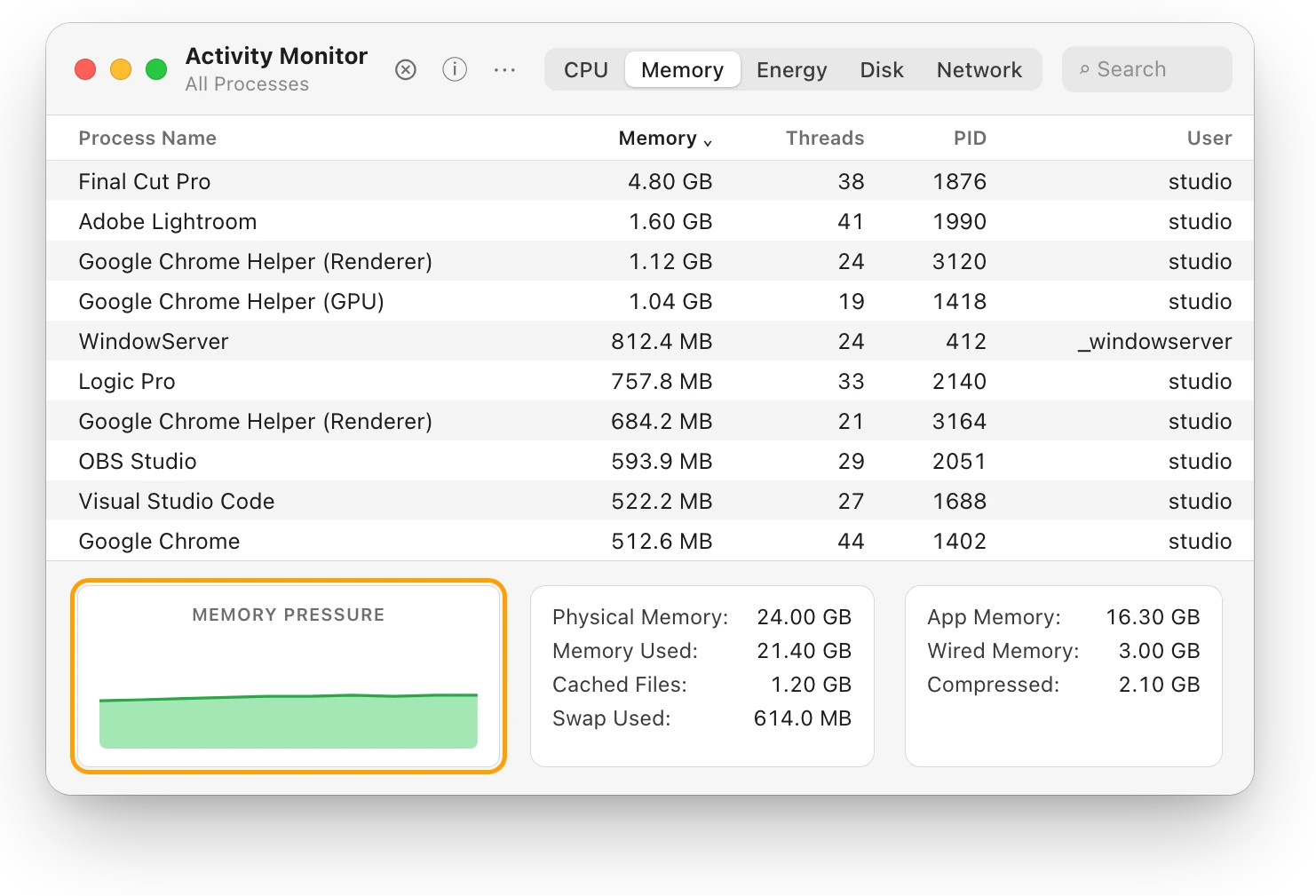
- Look at Swap Used at the bottom of the window, beside the Memory Pressure graph.
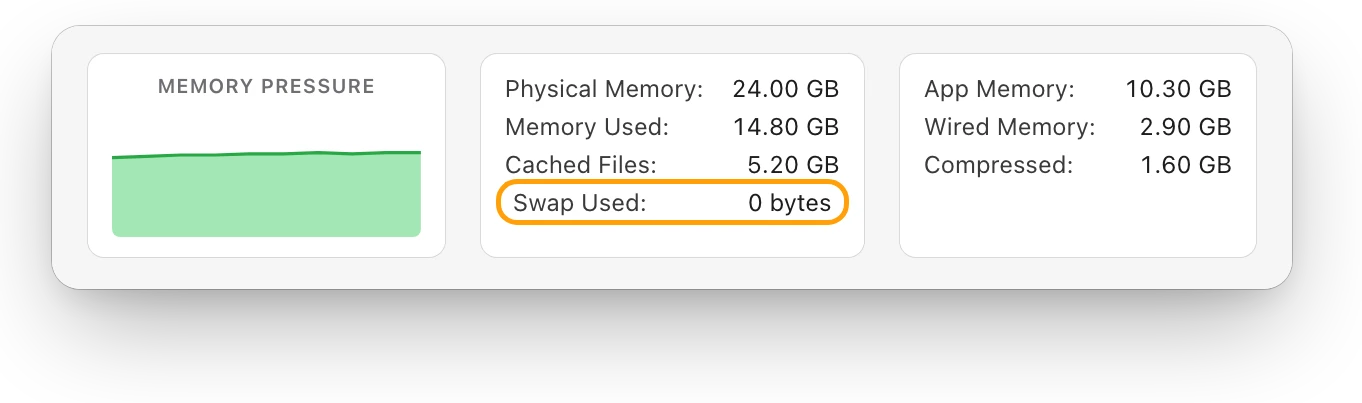
Apple describes Swap Used as the space being used on your startup disk to swap files to and from RAM.
What’s the difference between swap, compressed memory and cached files?
They’re three things macOS does with memory, and only swap uses the disk. Here’s how Apple describes each in Activity Monitor:
| In Activity Monitor | What Apple says it is | Where it lives |
|---|---|---|
| Compressed | Memory compressed to make more RAM available | RAM |
| Swap Used | Space on the startup disk used to swap files to and from RAM | Startup disk |
| Cached Files | Files kept in unused memory to improve performance, until the space is needed | RAM |
| Memory Pressure | How efficiently memory is serving your work, based on free memory, swap rate, wired memory and cached files | The graph |
Compressed memory and swap both make room in RAM; cached files give their room back when it’s needed.
When should I worry about swap?
Swap on its own isn’t the warning sign. Memory pressure is, because it already takes the swap rate into account.
| Memory Pressure | Swap Used | What it means |
|---|---|---|
| Green | 0 bytes | Everything fits in RAM |
| Green | Some, steady | Fine: macOS moved out what it wasn’t using |
| Yellow or red | Growing | Your Mac is short of memory for what’s open |
Apple says green means your Mac is using all of its RAM efficiently, yellow means it might eventually need more RAM, and red means it needs more RAM.
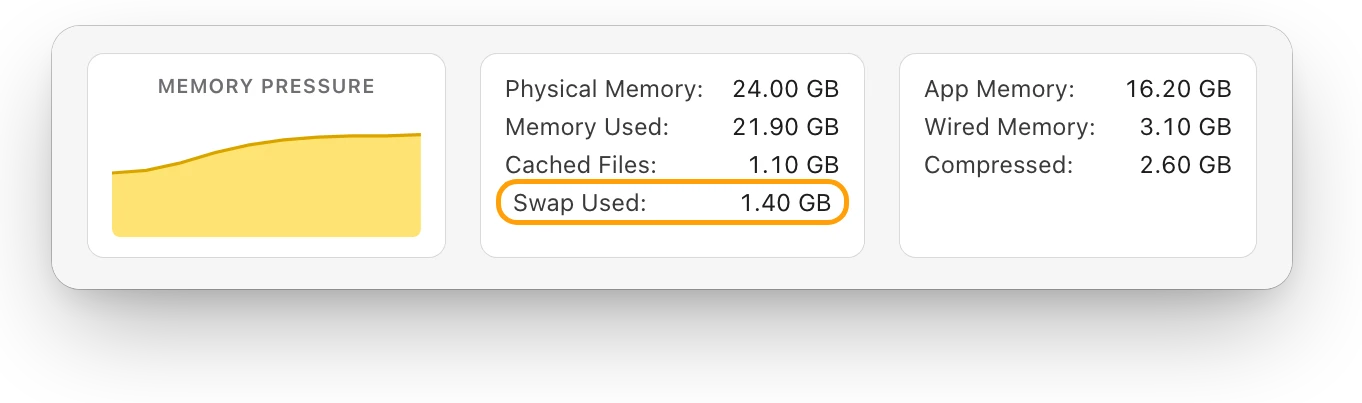
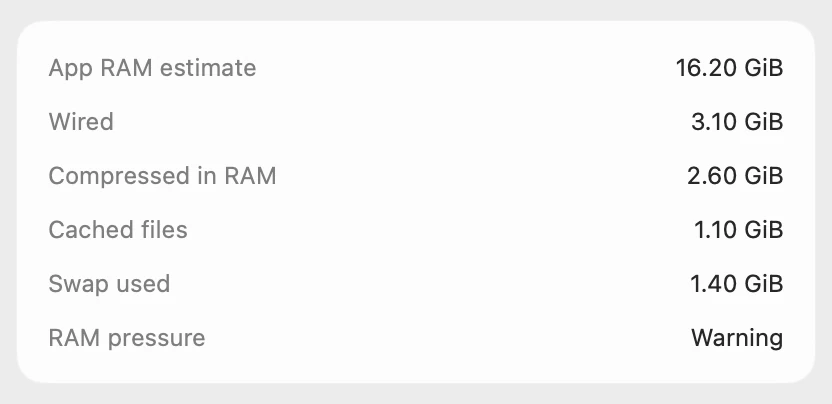
Here a second 8K timeline in Final Cut Pro, while Blender holds a large scene, filled the memory. Compressed has grown to 2.60 GB and Swap Used to 1.40 GB. Memory Used (21.90 GB) adds up App Memory, Wired Memory and Compressed.
How do I reduce swap usage on a Mac?
Make room in RAM, and macOS needs the disk less.
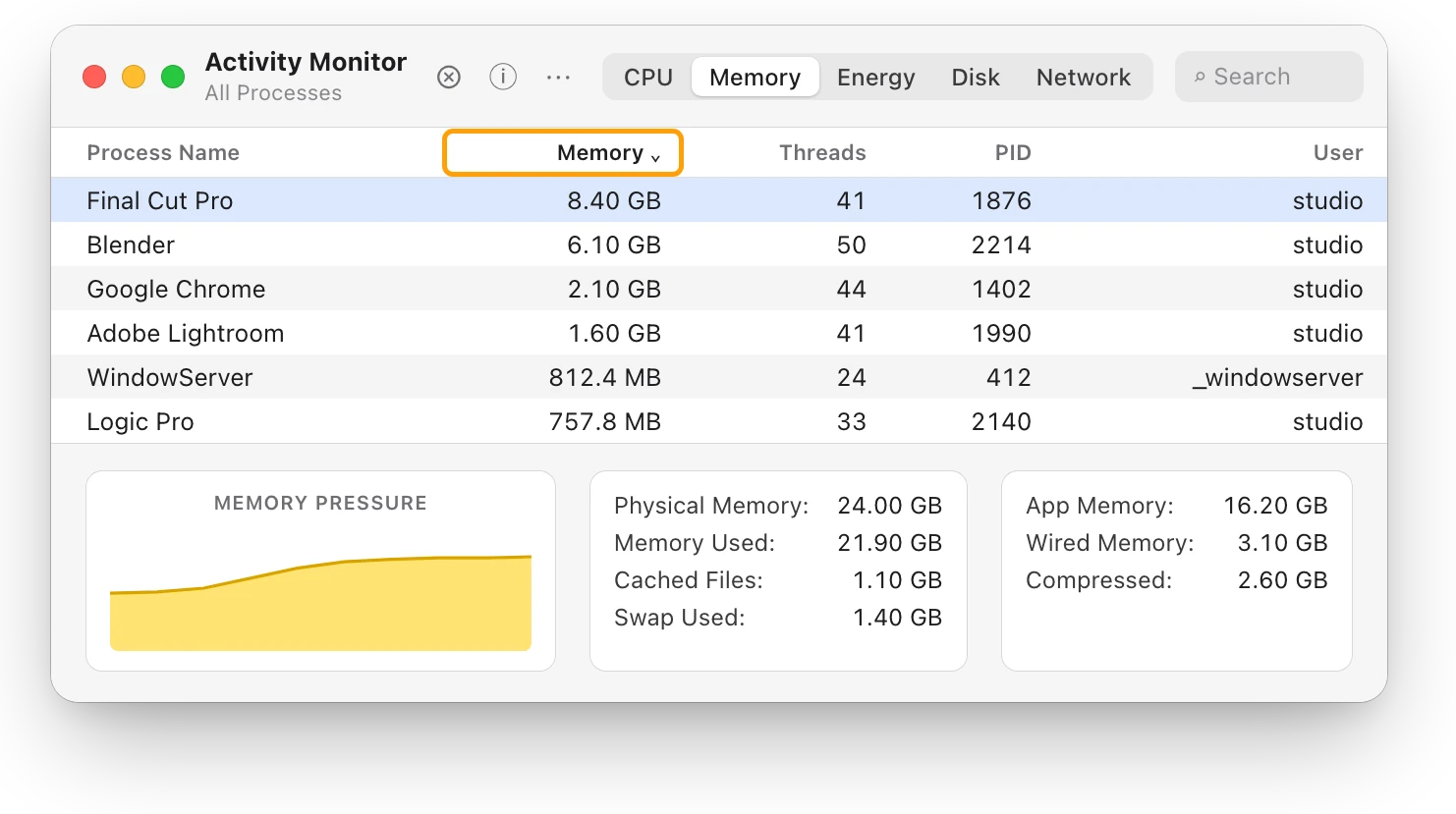
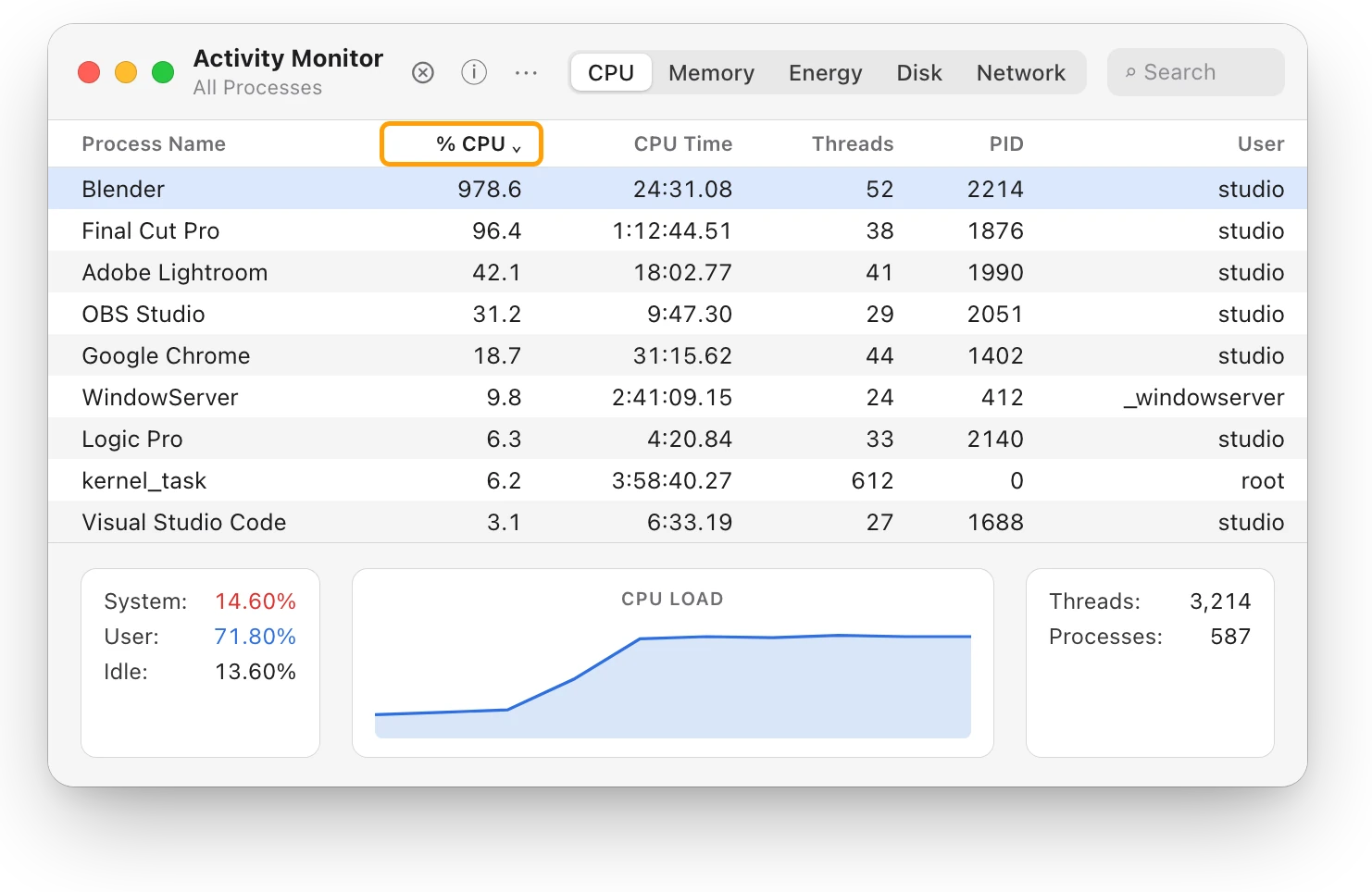
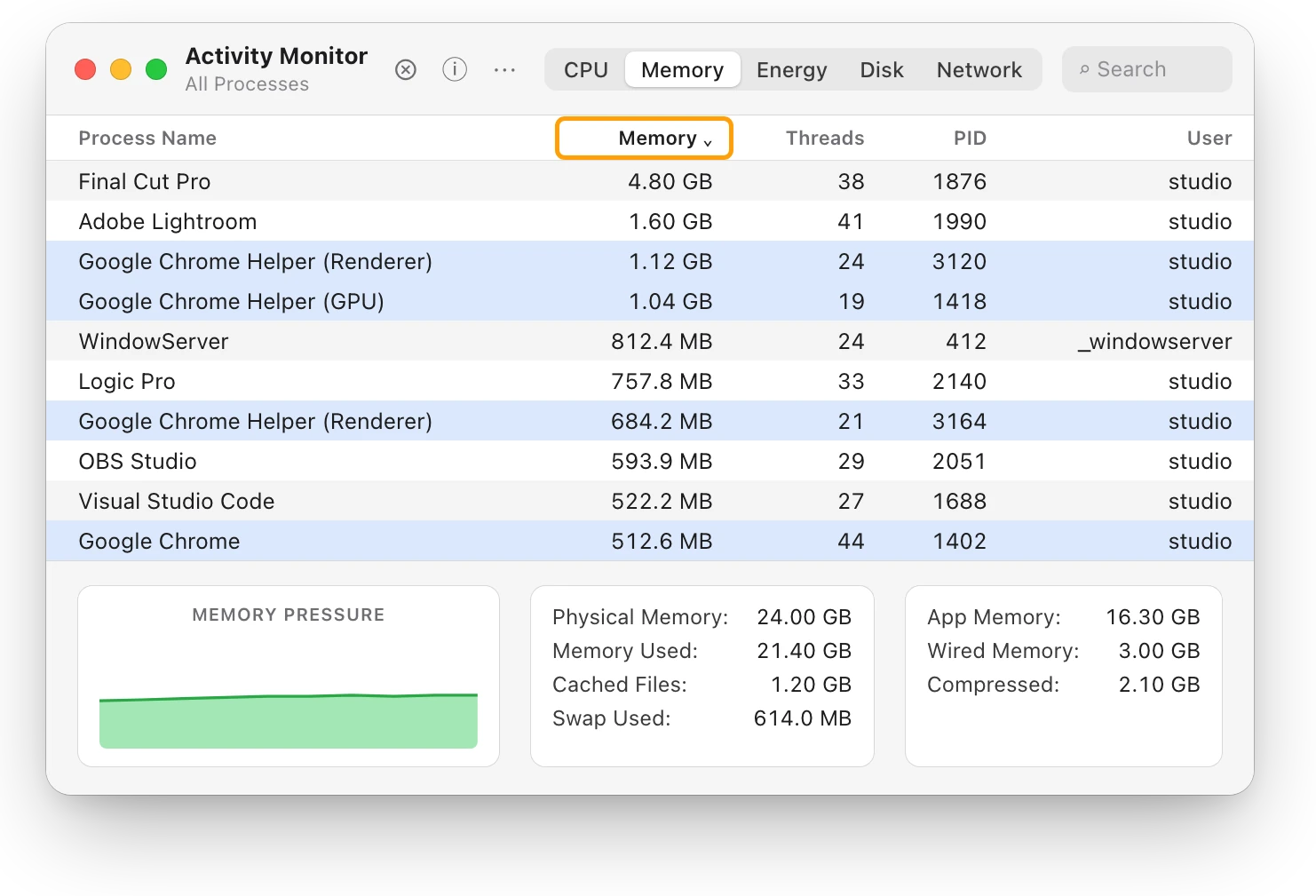
- In Activity Monitor’s Memory tab, click the Memory column heading to sort the list, largest first.
- Quit the apps you aren’t using, from their own menus. Save your work first.
- Close browser tabs you’re done with.
- If an app isn’t responding, select it, click the Stop button at the top of the window, then choose Quit. Choose Force Quit only if Quit doesn’t work, because unsaved work in that app is lost.
- Watch the Memory Pressure graph for a minute. If it turns green again, that was enough.
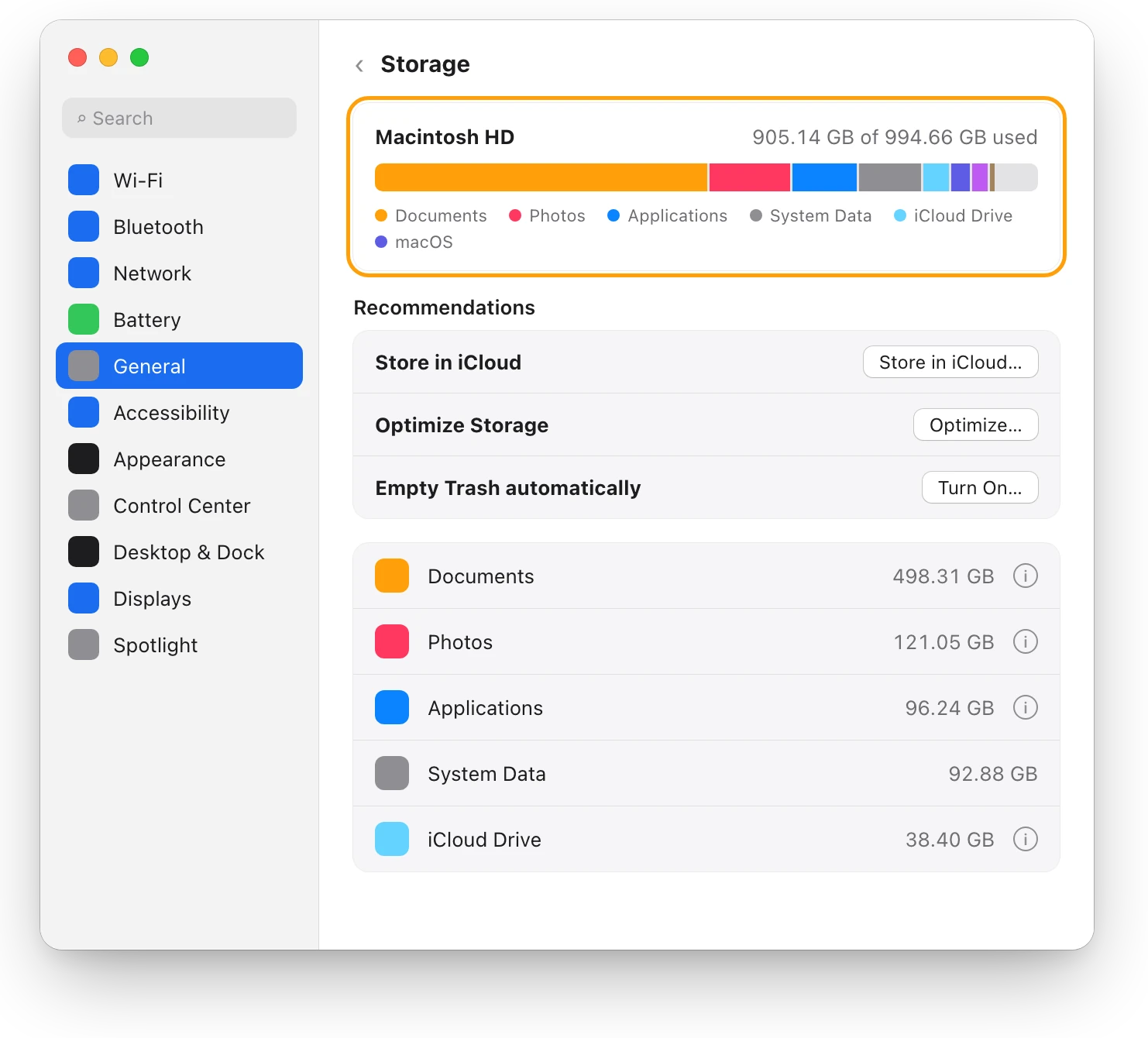
Keep free space on your startup disk too, because that’s where swap goes. Apple lists a startup disk without enough free space as one reason a Mac runs slowly. How much free space should a Mac have? helps you decide how much.
Does high swap mean I need more RAM?
Only if memory pressure stays yellow or red with just the apps you need open. Then your Mac needs more memory for that work. Apple says an app you’re using may need more memory than your Mac has easily available, which is one reason a Mac slows down.
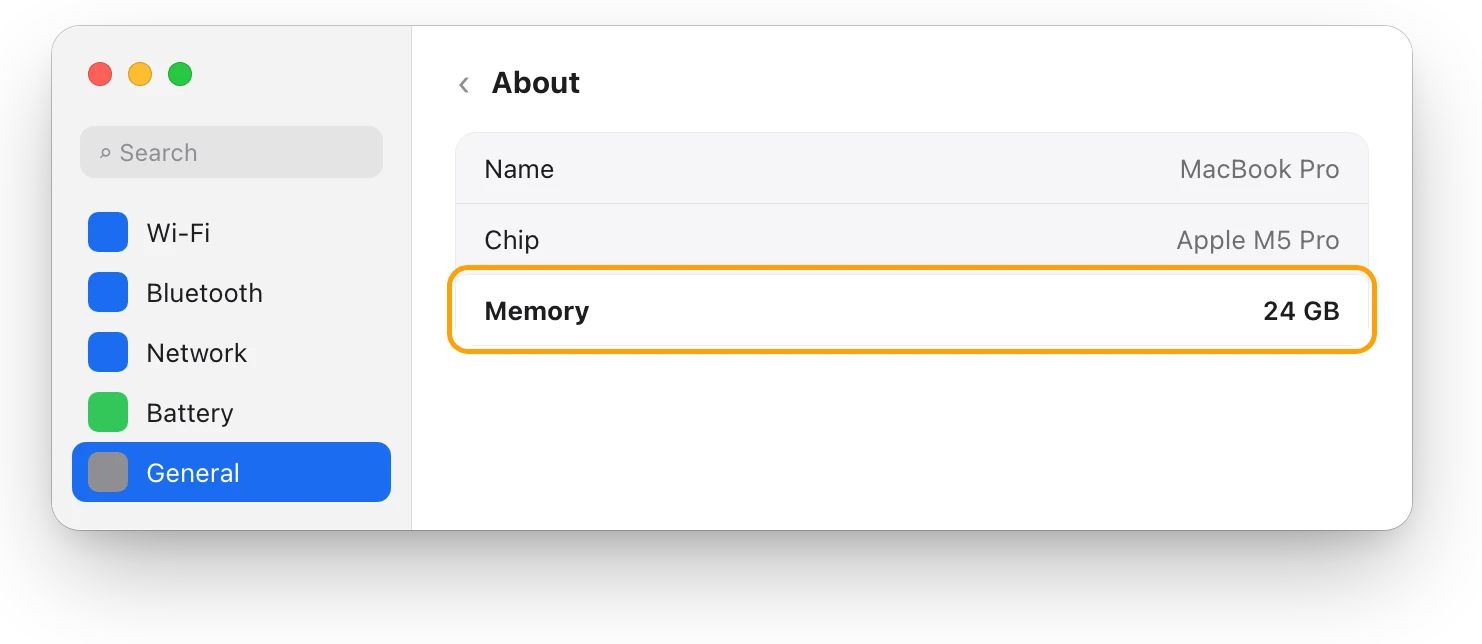
Many Macs’ memory can’t be added later. To check yours, hold Option, choose Apple menu > System Information, and click Memory: if there’s no Memory Slots section, it can’t be upgraded. Is 8 GB or 16 GB of RAM enough for your Mac? helps you choose for your next Mac, and Mac memory pressure: why high RAM use is often fine explains the graph in depth.
Questions people also ask
Is swap bad for my Mac’s SSD?
Apple doesn’t publish a figure for how swap affects an SSD, so we won’t guess. What Apple does give is the sign to act on: memory pressure. While it’s green, swap isn’t something to fix.
What is the swap file on a Mac?
It’s macOS’s swap space on the startup disk, the space Activity Monitor reports as Swap Used. It’s why a nearly full startup disk matters even for memory.
Does swap slow down a Mac?
It can, when your Mac swaps all the time because memory is short. That shows as yellow or red memory pressure. A little swap with green pressure isn’t slowing you down.
Scope for Mac · Free, coming to the Mac App Store
How Scope helps
Scope is a free Mac menu bar app that shows swap and compressed memory beside macOS’s memory pressure in plain words, with how RAM use has changed and the apps using the most. It saves reading Activity Monitor’s footer to tell normal swap from a Mac that’s running short.
In your menu bar
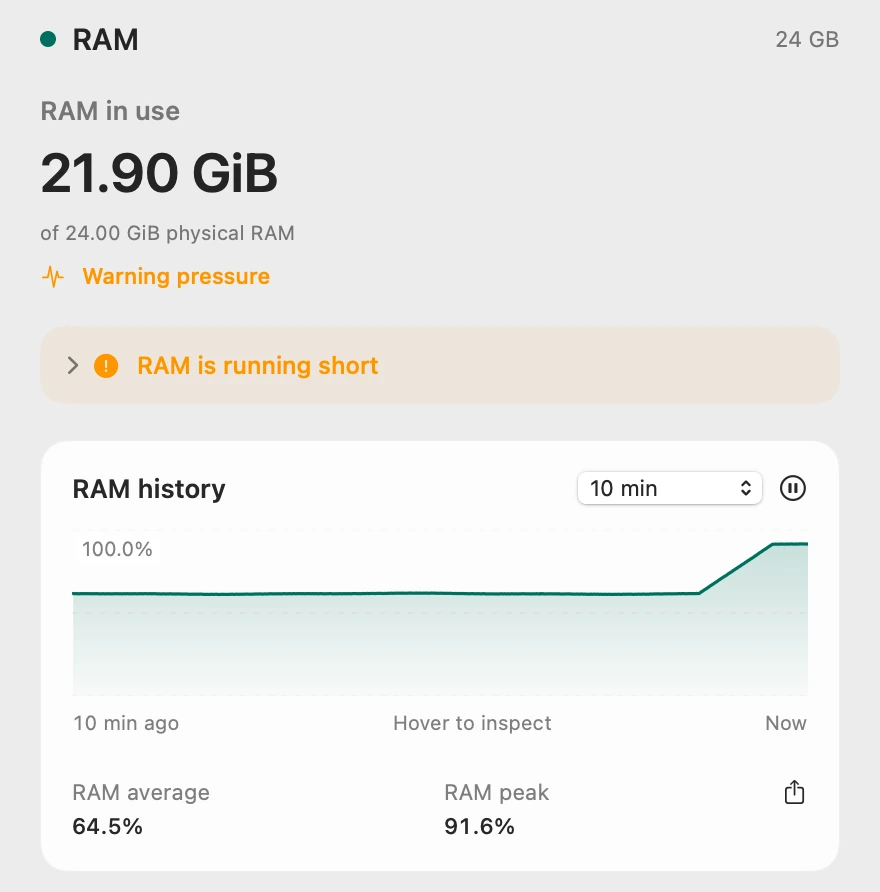
RAM reads 91% in the menu bar here, and the panel says what that means.

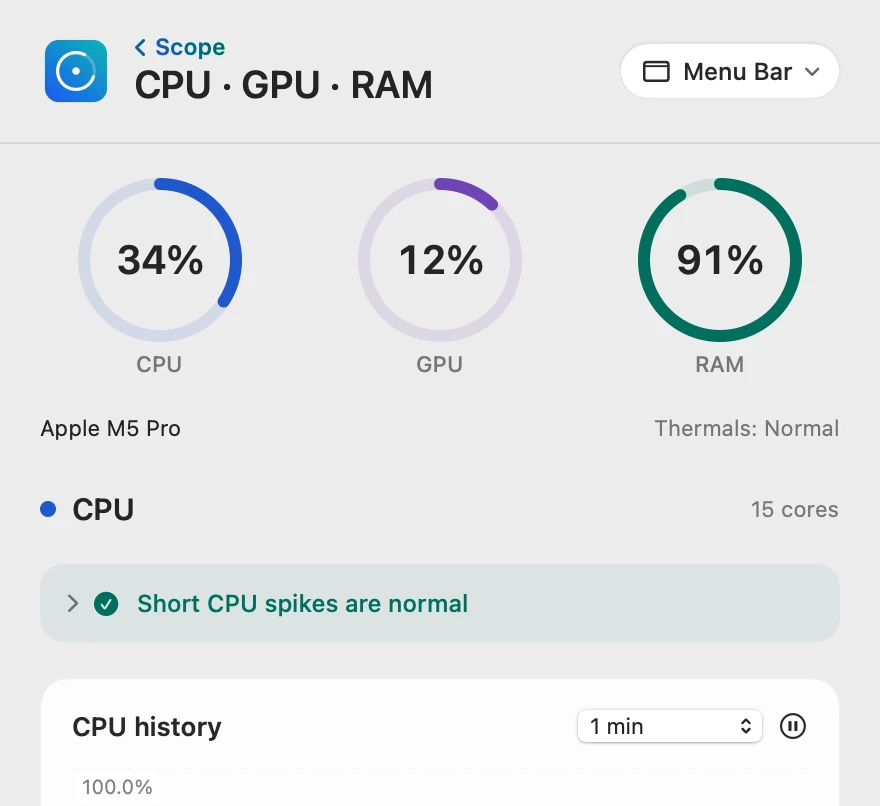
Swap beside pressure
These are the same numbers as Activity Monitor’s yellow moment above, in one card, with RAM pressure on its last line. Scope’s RAM pressure is macOS’s memory pressure in words: Normal, Warning or Critical for green, yellow or red. Scope writes GiB where Activity Monitor writes GB; for memory they’re the same measure.
When it started
RAM history shows when memory filled up, so you can match it to what you opened. The tip says “RAM is running short” while pressure is at Warning or Critical.
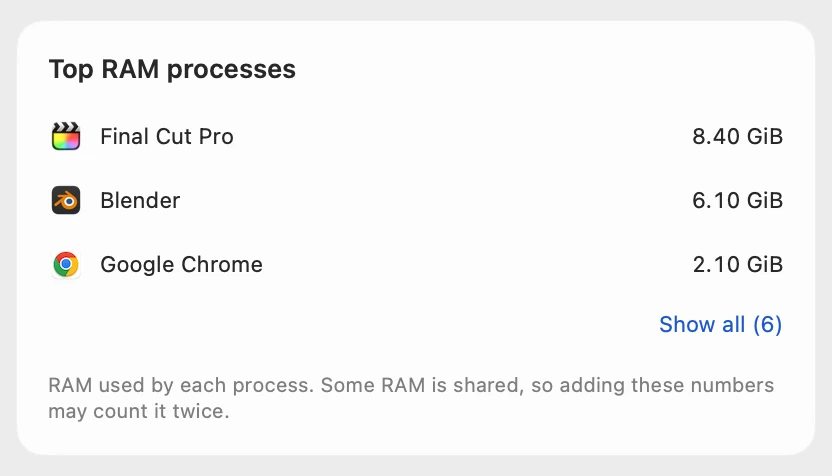
Which app to close
Top RAM processes lists the apps using the most memory, each with its app’s icon, so you know which one to close first.
Scope shows and explains. It doesn’t free memory, quit apps or change how macOS uses swap.
Try it here
The real Scope, working, right in this page.
Click any item in the menu bar, or a card inside, as you would on your Mac.
Scope Pro Every menu bar item is shown here. Scope Free keeps one whole item of your choice, with every reading inside.
See your own Mac’s swap and memory pressure.
Keep reading
Guide · Slow Mac
Why is my Mac slow? How to find the cause
A slow Mac is usually a busy app, too little memory, a nearly full disk or heat. Here’s how to see which one with macOS’s own tools.
Slow Mac
Mac memory pressure: why high RAM use is often fine
Memory pressure, not RAM in use, shows if your Mac has enough memory. Green is fine even when RAM is nearly full; yellow or red means it’s running short.
Slow Mac
Is 8 GB or 16 GB of RAM enough for your Mac?
Memory pressure tells you if your Mac has enough RAM: green on your busiest day means it does. Here’s how to check, and what to buy next.
Storage
How much free space should a Mac have?
Apple gives no single number. A Mac needs room for macOS updates and swap, and a nearly full disk can slow it down. Here’s how much to keep free.
Slow Mac
Why is Chrome using so much memory on a Mac?
Chrome runs tabs and parts of the browser as separate processes, so its memory adds up. Here’s how to see it on a Mac, and when it matters.
Sources
- Apple Support: View memory usage in Activity Monitor on Mac
- Apple Support: Check if your Mac needs more RAM in Activity Monitor
- Apple Support: If your Mac runs slowly
- Apple Support: Quit a process in Activity Monitor on Mac
Last checked October 18, 2026. Readings, apps and files in the pictures are from a made-up Mac.