How to empty the Trash on a Mac, and when it won’t
To empty the Trash on a Mac, click the Trash in the Dock, click Empty in the upper-right corner of the window, then click Empty Trash. You can also choose Finder > Empty Trash, or press Shift-Command-Delete. Emptying the Trash deletes its items for good and gives their space back. To have it done for you, select Remove items from the Trash after 30 days in Finder settings.
How do I empty the Trash on a Mac?
The Trash sits at the end of the Dock. Files you delete wait there until you empty it.
- Click the Trash icon in the Dock. A Finder window opens with what’s in it.
- Look through the items. To keep one, drag it out of the window, or select it and choose File > Put Back.
- Click Empty in the upper-right corner of the window.
- In the warning that appears, click Empty Trash.
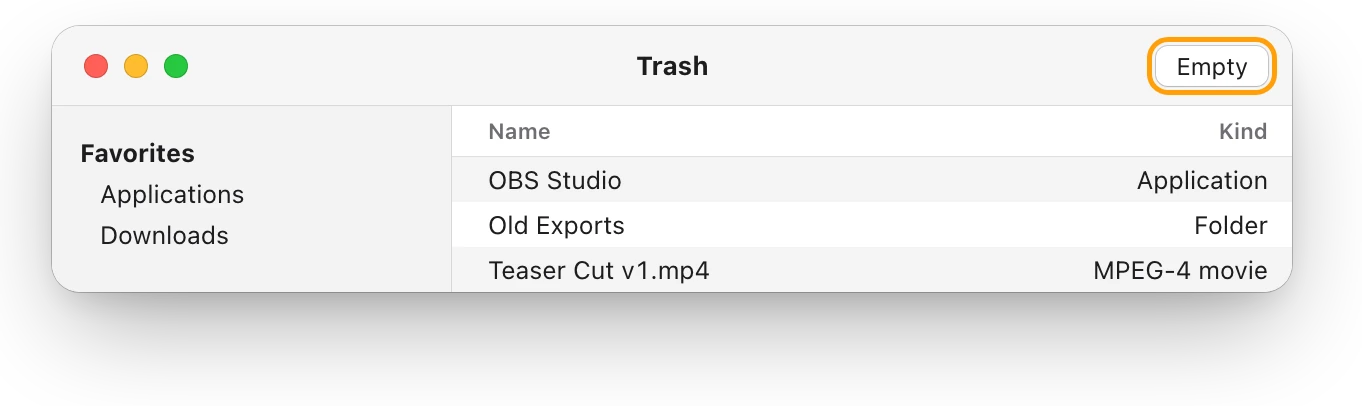
Other ways to do the same thing:
- From the menu bar: in Finder, choose Finder > Empty Trash.
- With the keyboard: press Shift-Command-Delete in Finder. Option-Shift-Command-Delete empties the Trash without the warning.
How do I delete just one item from the Trash?
Control-click the item in the Trash, then choose Delete Immediately. In the warning that appears, click Delete. Everything else stays in the Trash.
Does emptying the Trash free up space?
Yes. A file you move to the Trash still takes up space until you empty it. To see how much you’ll get back:
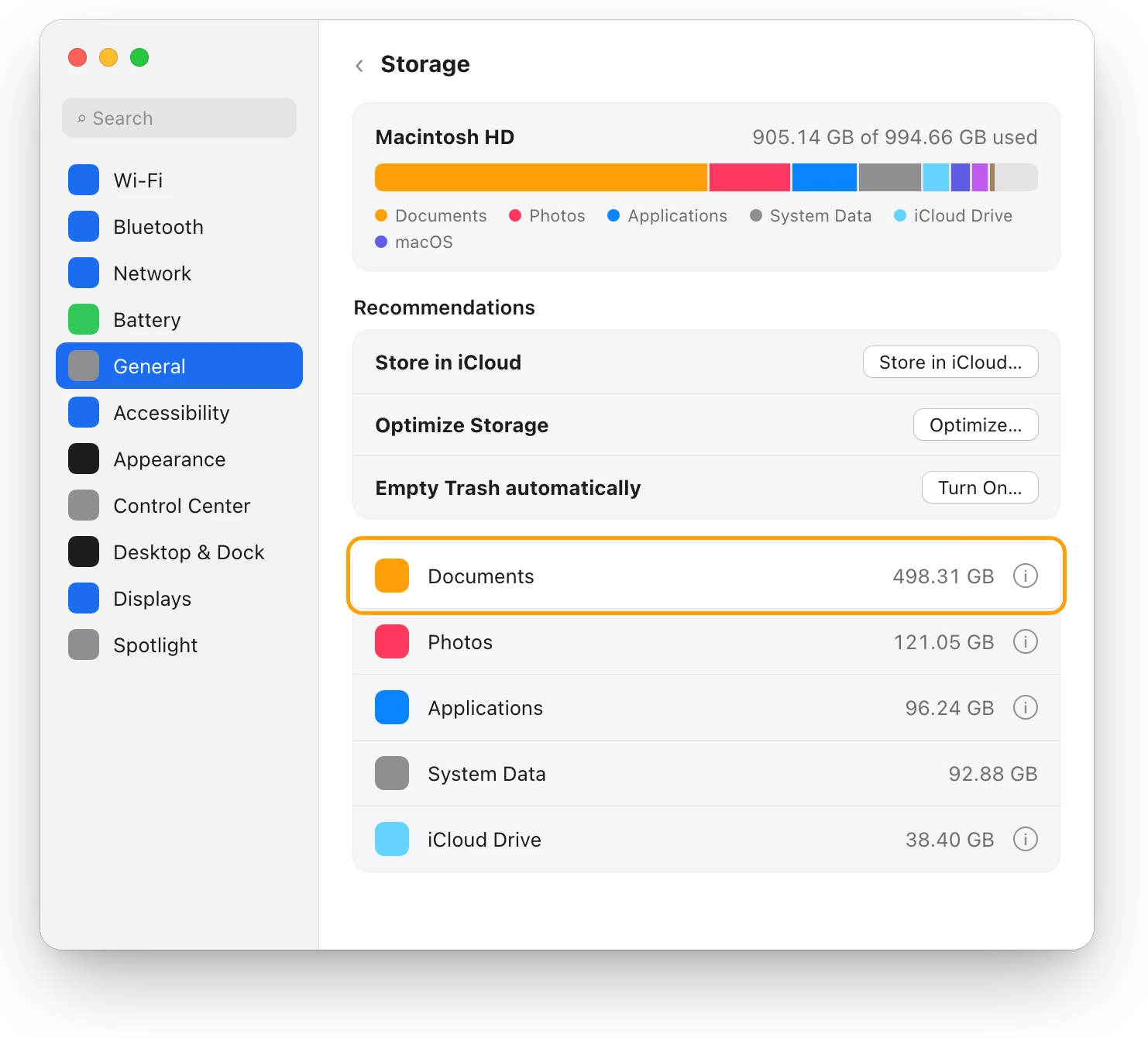
- Choose Apple menu > System Settings, then click General in the sidebar. You may need to scroll down.
- Click Storage, and wait while macOS adds up each category.
- Find Trash in the list of categories. Its size is the space emptying gives back.
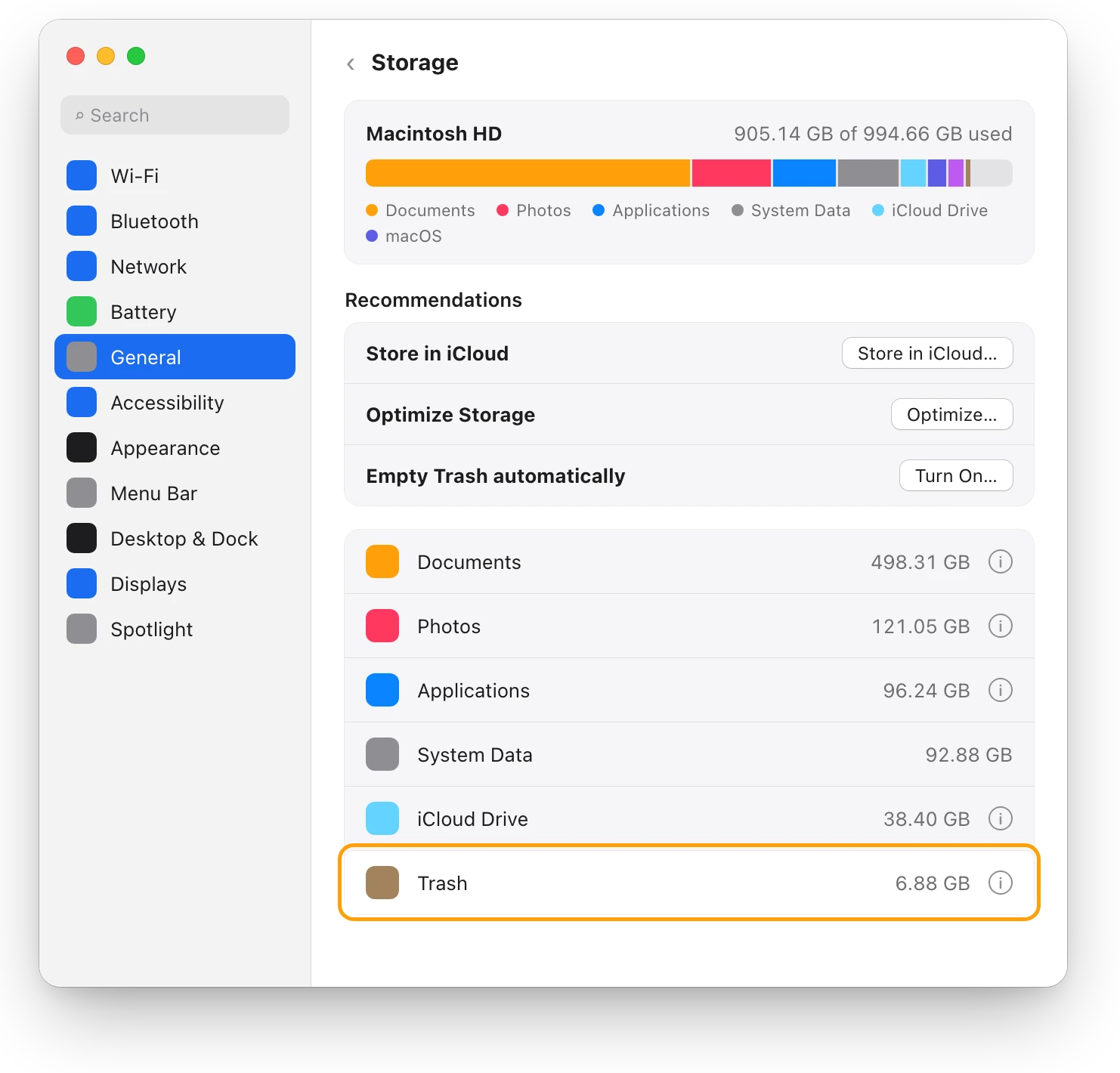
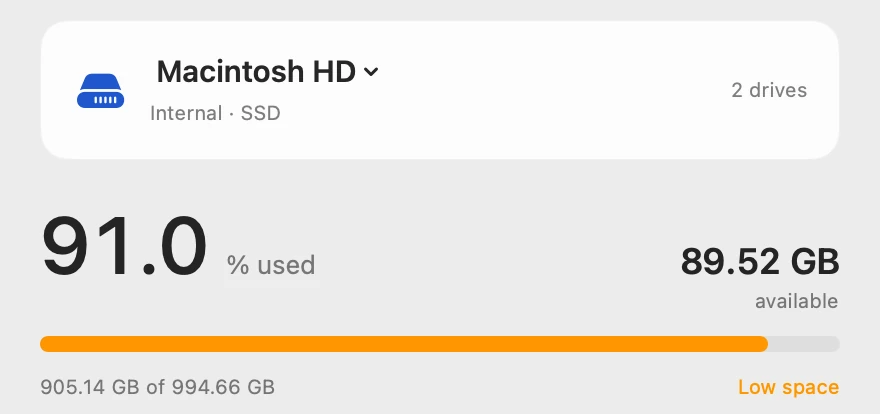
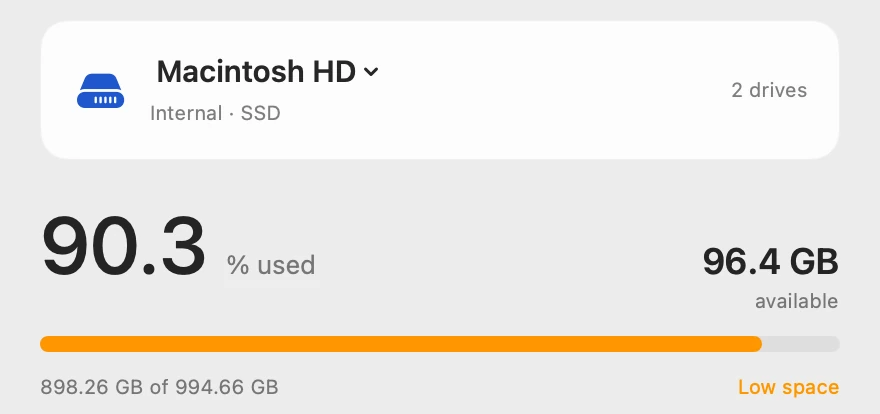
On this Mac, emptying the Trash takes available space from 89.52 GB to 96.4 GB. Items you delete from iCloud Drive aren’t counted in the Trash’s size there.
How do I empty the Trash automatically?
Finder can empty old items for you.
- In Finder, choose Finder > Settings, then click Advanced.
- Select “Remove items from the Trash after 30 days.”
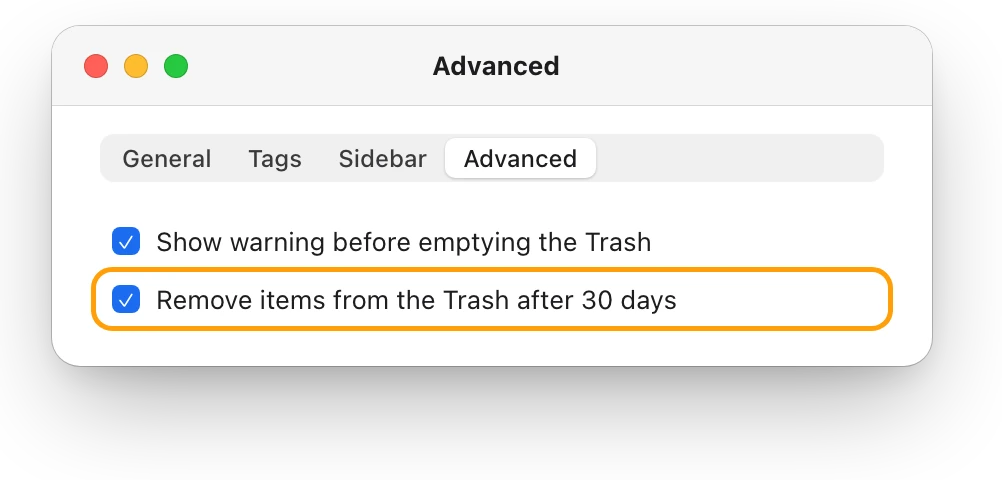
Storage in System Settings offers the same setting: its recommendation Empty Trash automatically erases items that have been in the Trash for more than 30 days. Turn it on in either place.
Two things to know:
- Items removed this way are deleted for good. If you might want something later, keep a Time Machine backup or a copy on another drive.
- Items you move to the Trash from iCloud Drive are removed after 30 days whatever Finder’s setting says.
Why won’t my Trash empty?
Check the items in it, one at a time.
| What happens | Why | What to do |
|---|---|---|
| A lock appears on an item’s icon | The item is locked | Select it, choose File > Get Info, then deselect Locked |
| The Mac says an item is in use | An app still has it open | Quit that app, then try again; if needed, restart your Mac |
| A Recovered Files folder appears | An app quit unexpectedly and left temporary files | Drag out anything useful, then empty the Trash |
For a locked item, Apple’s steps are: select it, choose File > Get Info (or press Command-I), then deselect the Locked checkbox. If you’re not logged in as an administrator, you may need to click the lock and enter an administrator’s name and password first.
For an item in use, make sure no app has it open. Apple gives the same advice for an app that can’t be deleted because it’s in use: if it still won’t go, restart your Mac, then try again.
Recovered Files folders can appear after a restart. Apple explains they hold temporary files from an app that quit before it could delete them. Check with the app’s developer if you’re not sure what they are.
How do I stop the warning before emptying the Trash?
- Once: hold the Option key when you click Empty or choose Empty Trash.
- Always: choose Finder > Settings, click Advanced, then deselect “Show warning before emptying the Trash.”
The warning is worth keeping. Emptied items can’t be brought back from the Trash.
Questions people also ask
Where is the Trash on a Mac?
At the end of the Dock. Click it to open a Finder window with everything you’ve deleted but not yet emptied.
Can I get files back after emptying the Trash?
Not from the Trash. Apple says items emptied from the Trash are permanently deleted. If you back up with Time Machine, look for them in a backup.
What’s the keyboard shortcut to empty the Trash?
In Finder, press Shift-Command-Delete, then confirm. Option-Shift-Command-Delete empties it without the warning, so use it only when you’ve already looked.
Is it safe to empty the Trash?
Yes, once you’ve checked that nothing in it is something you need. Open the Trash and look first.
Why is my Mac still full after emptying the Trash?
The Trash is often small next to your own files. Storage in System Settings shows which category is biggest, and How to free up space on a Mac ranks every way to get space back.
Scope for Mac · Free, coming to the Mac App Store
How Scope helps
Scope is a free Mac menu bar app that shows how full your Mac’s disk is, in percent and gigabytes, so you can see the space come back after you empty the Trash. It saves reopening Storage and waiting for it to add up after every step.
In your menu bar
Scope Free keeps one whole menu bar item of your choice. Drive shows how full your Mac’s disk is: here, Mac at 91%.

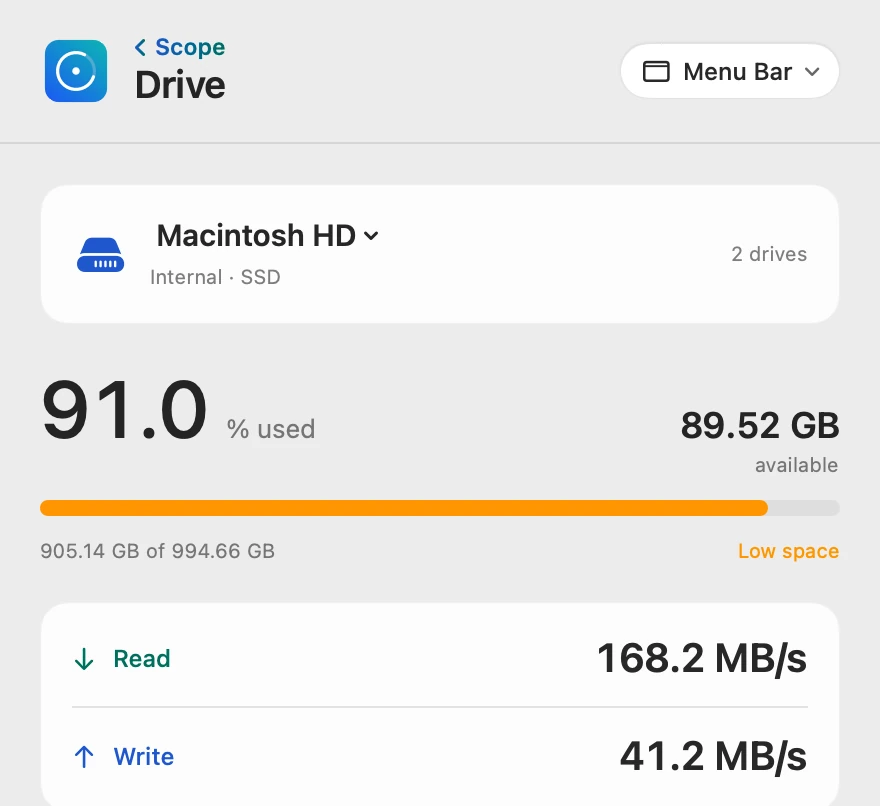
Before and after
Emptying the Trash helped, but this drive is still over its limit, so the bar stays orange and Low space stays. Open Drive after each step to see what it gave back.
Where the big files are
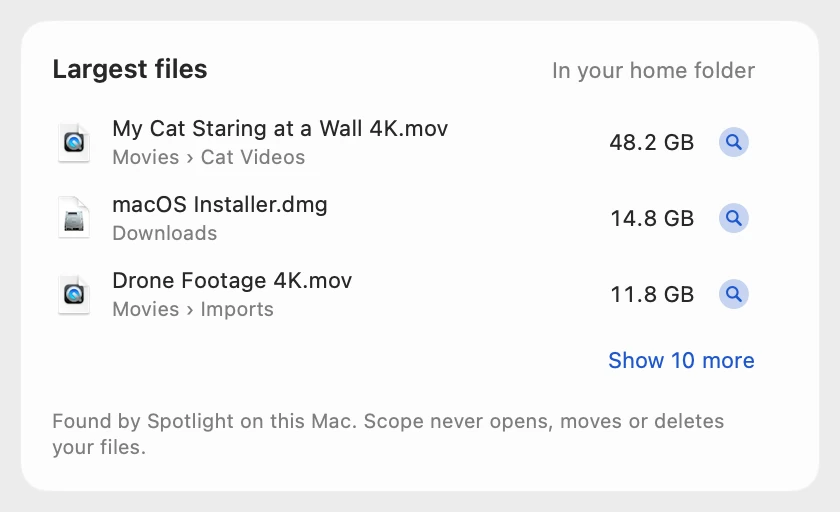
Largest files lists the biggest files in your home folder, three at first and ten more at a time, each with Show in Finder. It’s in Scope Free, once you allow Scope to read your home folder.
Scope shows and explains. It never empties the Trash or deletes files for you.
Try it here
The real Scope, working, right in this page.
Click any item in the menu bar, or a card inside, as you would on your Mac.
Scope Pro Every menu bar item is shown here. Scope Free keeps one whole item of your choice, with every reading inside.
See how much room your own Mac has.
Keep reading
Guide · Storage
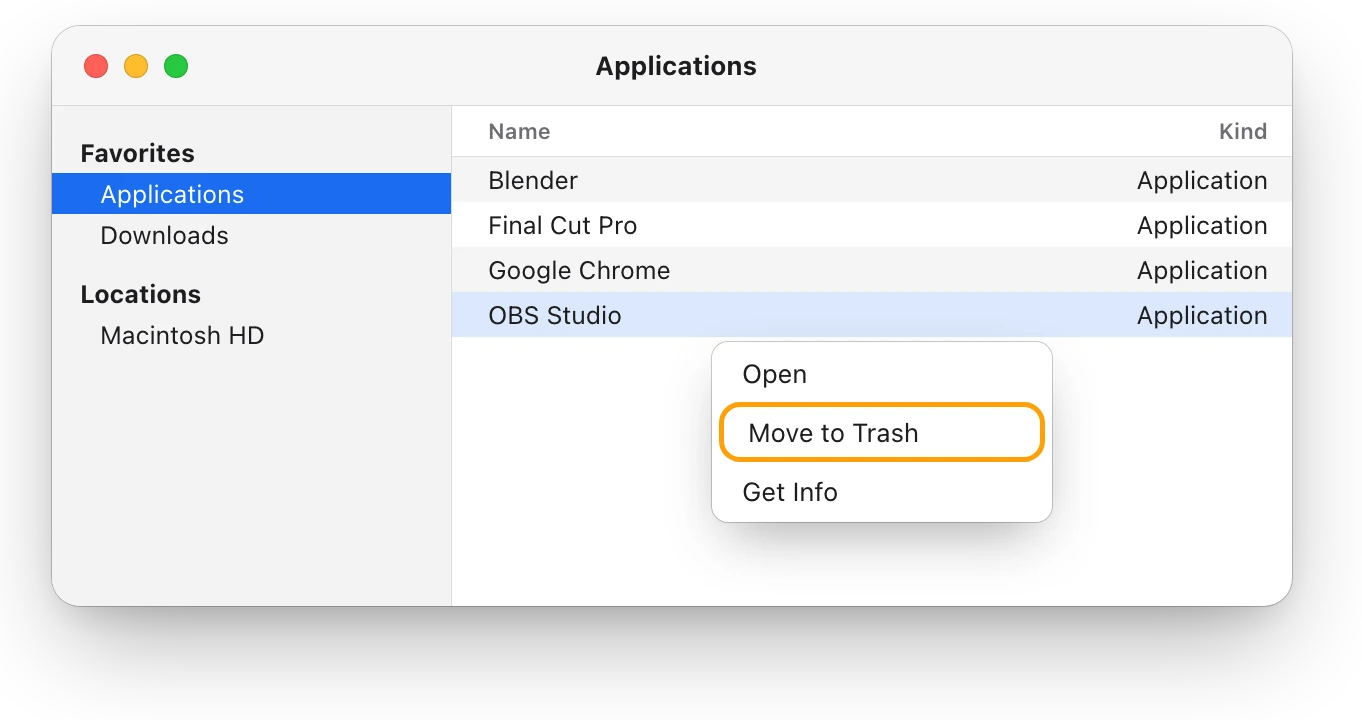
Mac storage full? Where your space went
When Mac storage is full, Storage in System Settings shows what’s using it. Here’s where the space usually goes, and how to get it back safely.
Storage
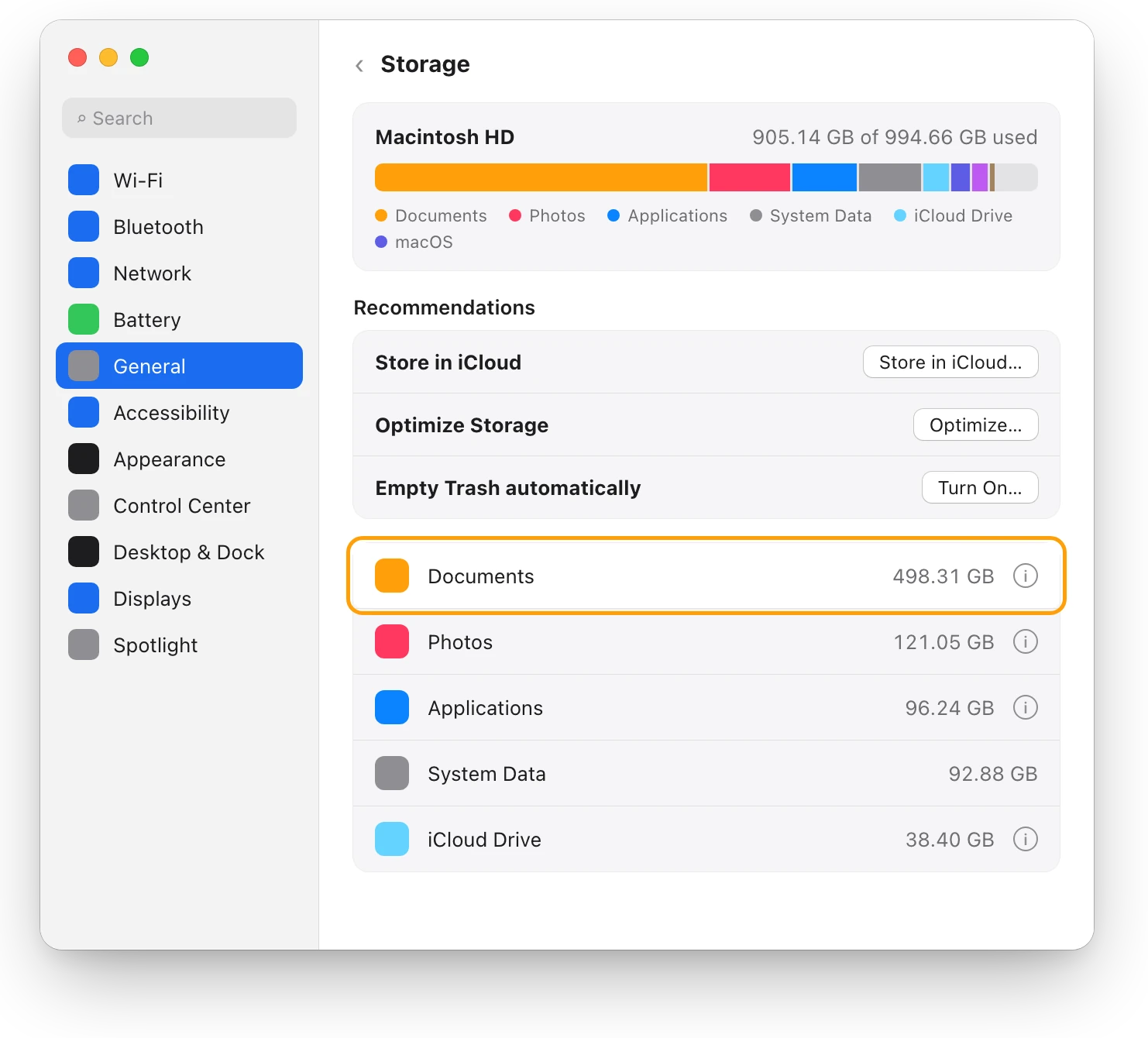
How to delete apps on a Mac, and what’s left behind
Delete a Mac app by dragging it from Applications to the Trash, or with its own uninstaller, then empty the Trash. Every way, and what stays behind.
Storage
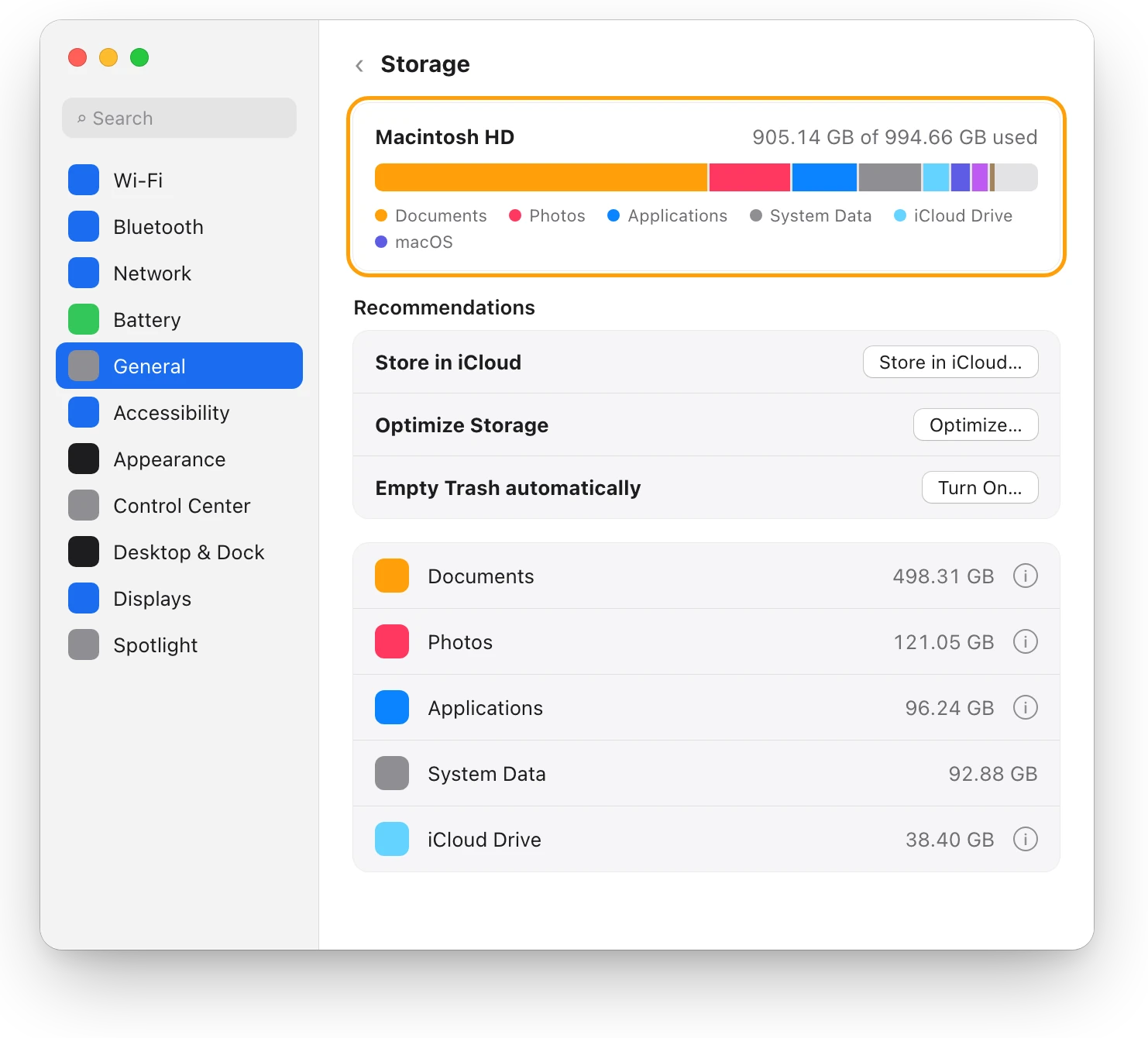
How to free up space on a Mac: every way, ranked
Every way to free up space on a Mac, biggest first: large files, external drives, Photos and iCloud Drive, Downloads, backups and the Trash, with risks.
Storage
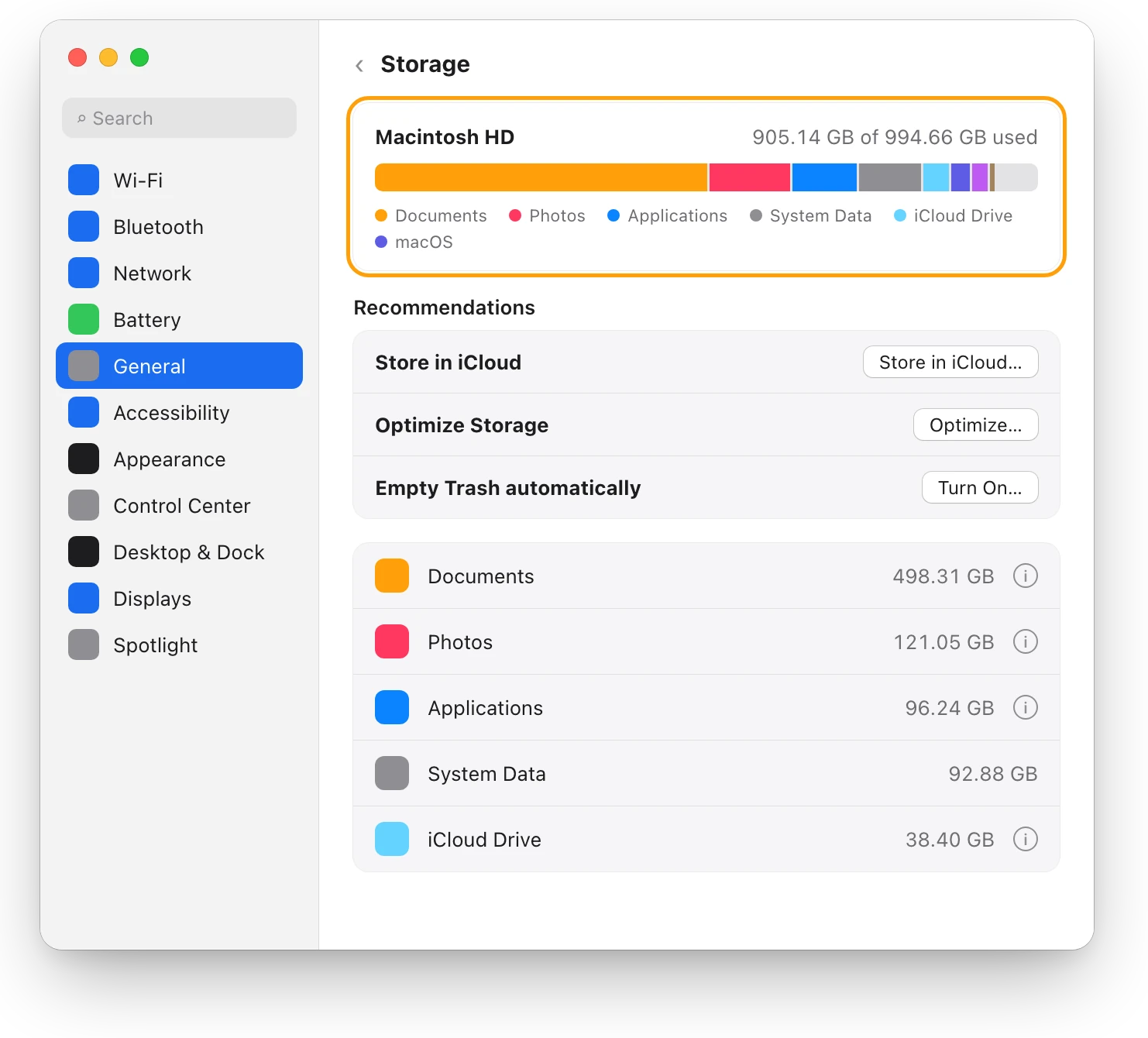
“Your disk is almost full”: what to do first
When your Mac’s disk is almost full, check Storage in System Settings, empty the Trash, then delete or move large files. Here’s what to do first.
Storage
How to check storage on a Mac: 4 ways
Check storage in System Settings > General > Storage, in Finder with Get Info or the status bar, or in Disk Utility, and see why their numbers differ.
Sources
- Apple Support: Delete files and folders on Mac
- Apple Support: Change Finder settings on Mac
- Apple Support: Mac keyboard shortcuts
- Apple Support: Optimize storage space on your Mac
- Apple Support: Change Storage settings on Mac
- Apple Support: Free up storage space on Mac
- Apple Support: If the Trash contains recovered files on Mac
- Apple Support: Delete or uninstall apps on Mac
- Apple Support: Install and uninstall apps from the internet or a disc on Mac
Last checked October 19, 2026. Readings, apps and files in the pictures are from a made-up Mac.